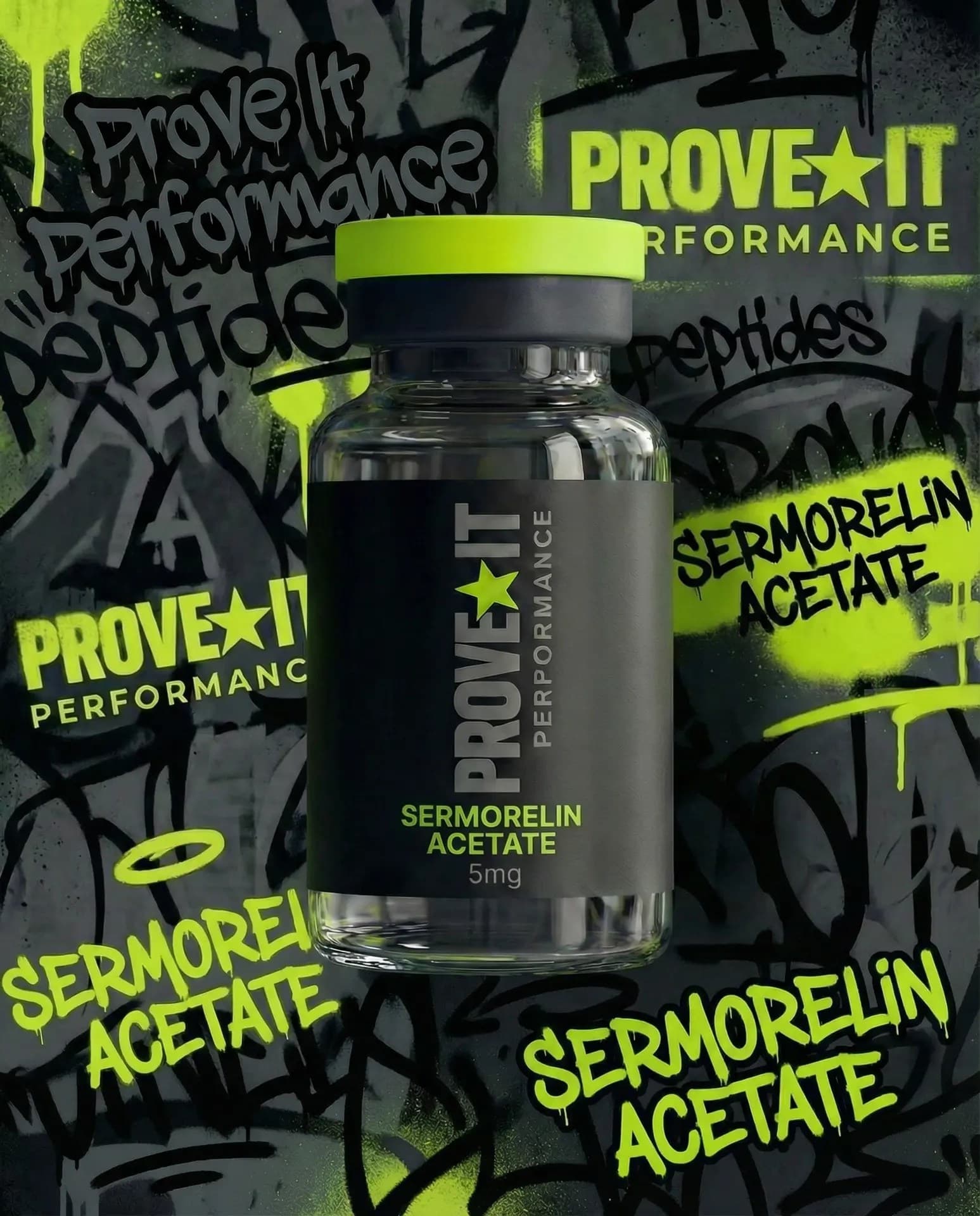
Sermorelin acetate is a synthetic peptide studied in research as an agonist at the growth hormone releasing hormone receptor (GHRHR). It is catalogued under CAS number 86168-78-7 with a molecular formula of C₁₄₉H₂₄₆N₄₄O₄₂S and a molecular weight of 3357.9 Da. The compound represents the synthetic form of the first 29 amino acids of endogenous human growth hormone releasing hormone (GHRH), and it is the acetate salt of that peptide sequence. It is supplied as a lyophilized powder for laboratory research and is intended solely for research purposes, not for human use.
Within GH secretagogue research, sermorelin occupies a distinct position from ghrelin receptor agonists like ipamorelin. The two compound classes converge on GH secretion in research models but act through entirely separate receptor pathways, and sermorelin's connection to the native GHRH sequence makes it a well-characterized probe for studying the GHRH axis at the receptor and signaling level.
What is the molecular structure of sermorelin acetate?
Sermorelin acetate has a molecular weight of 3357.9 Da and the molecular formula C₁₄₉H₂₄₆N₄₄O₄₂S. The peptide chain comprises 29 amino acid residues and corresponds to the N-terminal fragment of endogenous human GHRH. It terminates with a C-terminal amide (NH₂), which is a structural feature that characterizes the active fragment — the full 44-amino-acid GHRH also carries a C-terminal amide that is required for receptor binding activity. The "acetate" designation indicates the acetate salt form in which the peptide is supplied, which is standard for lyophilized research peptide preparations.
The molecular formula includes one sulfur atom, contributed by the methionine residue within the 29-amino-acid sequence. The presence of methionine makes sermorelin susceptible to oxidative degradation at that residue under certain storage conditions, which is one reason cold storage and protection from oxidizing environments are standard for this compound class. The research-grade material is characterized to a purity specification of 99.3% by HPLC, and the lyophilized form is a white to off-white powder.
What is the relationship between sermorelin and endogenous GHRH?
Endogenous human GHRH is a 44-amino-acid peptide produced in the hypothalamus that acts on the pituitary gland to stimulate the synthesis and release of growth hormone. It is the primary positive regulator of GH secretion in the hypothalamic-pituitary axis. Sermorelin is the synthetic peptide corresponding to the first 29 amino acids of this hormone — the N-terminal fragment designated hGRF(1-29)-NH₂ in the research literature.
The research rationale for studying the 1-29 fragment rather than the full 44-amino-acid sequence comes from early characterization studies that identified the N-terminal 29 residues as sufficient for GHRHR binding and full receptor activation. The C-terminal portion of native GHRH (residues 30-44) contributes to circulatory stability but is not required for receptor engagement in the documented research models. This means sermorelin retains the receptor pharmacology of native GHRH in a shorter, more tractable synthetic form. Studying sermorelin allows researchers to examine GHRH receptor signaling with a well-defined synthetic compound of known sequence and molecular weight rather than working with the full-length, less stable native hormone.
What receptor does sermorelin acetate target?
Published research characterizes sermorelin as an agonist at the GHRH receptor (GHRHR), a class B G-protein-coupled receptor expressed primarily in anterior pituitary somatotroph cells. Class B GPCRs are a structurally distinct subfamily from the class A receptors that include the ghrelin receptor (GHSR-1a) — a mechanistically relevant distinction when comparing sermorelin and ipamorelin in research design.
GHRHR signals predominantly through the Gs protein pathway, which activates adenylyl cyclase and elevates intracellular cyclic AMP (cAMP). The resulting cAMP accumulation activates protein kinase A (PKA), which phosphorylates downstream transcription factors and effectors involved in GH gene expression and the secretory pathway in somatotroph cells. This Gs/cAMP/PKA cascade is the primary signaling axis studied in the context of sermorelin's pituitary activity and is mechanistically distinct from the Gq/G11/calcium cascade activated by ghrelin receptor agonism.
How does sermorelin's mechanism differ from ghrelin-based GH secretagogues?
The fundamental mechanistic difference between sermorelin and ghrelin-based GH secretagogues like ipamorelin is the receptor each compound targets and the downstream signaling it activates. Sermorelin acts on GHRHR via Gs/cAMP signaling. Ipamorelin acts on GHSR-1a via Gq/G11/calcium signaling. These are distinct GPCRs with distinct G-protein coupling, distinct second messenger cascades, and distinct regulatory inputs in the hypothalamic-pituitary axis.
Property
Sermorelin Acetate
Ipamorelin
Receptor target
GHRHR (class B GPCR)
GHSR-1a (class A GPCR)
G-protein coupling
Gs → adenylyl cyclase → cAMP
Gq/G11 → PLC → calcium
Endogenous ligand analog
GHRH (1-29)
Ghrelin (synthetic selective agonist)
Molecular weight
3357.9 Da
711.9 Da
Structure
29-amino-acid peptide
Pentapeptide
Published research examines both pathways in parallel because their combined activation produces larger GH secretory responses in preclinical models than either pathway alone. The amplifying relationship between GHRHR signaling (cAMP pathway) and GHSR-1a signaling (calcium pathway) in pituitary somatotrophs is a well-documented pharmacological interaction in the GH secretagogue literature. For a detailed overview of the complementary compound, see our ipamorelin research overview. Understanding the mechanistic distinction is essential for experimental design, since treating these compounds as interchangeable would misrepresent their distinct receptor and signaling profiles.
What does published research describe about sermorelin's pituitary signaling mechanisms?
Published research characterizes sermorelin's mechanism in terms of GHRHR binding and the downstream Gs/cAMP/PKA signaling cascade in anterior pituitary somatotrophs. GHRHR binding affinity studies establish sermorelin's receptor pharmacology as equivalent to native GHRH in model systems. Downstream, cAMP accumulation in somatotroph cell cultures has been documented in response to GHRHR activation, along with PKA-dependent phosphorylation of transcription factors regulating the GH gene.
Research also examines the regulatory interplay between sermorelin's GHRHR activation and somatostatin, the primary inhibitory regulator of GH secretion. Somatostatin acts through Gi-coupled receptors that suppress adenylyl cyclase activity — directly opposing the cAMP-elevating effect of GHRHR stimulation. The competitive dynamics between GHRH receptor agonism and somatostatin inhibition are a central topic in the GH axis literature, and sermorelin is a standard research tool for probing this regulatory balance. Prove It Performance does not make any therapeutic or outcome claims regarding sermorelin acetate; it is studied solely for its effects on GHRHR pharmacology and pituitary signaling mechanisms in research settings.
What is known about sermorelin acetate's stability and handling in research?
Sermorelin acetate is supplied as a lyophilized powder and stored at −20°C to preserve structural integrity. The methionine residue within the 29-amino-acid sequence is susceptible to oxidation under exposure to oxygen and peroxides, which is the primary degradation pathway of concern for this compound in storage. Research handling practices that support reproducibility include maintaining cold storage, limiting exposure to oxidizing conditions, minimizing freeze-thaw cycling, and protecting the lyophilized material from moisture and heat.
The compound's molecular weight of 3357.9 Da places it in the mid-range for lyophilized research peptides — larger than small synthetic pentapeptides like ipamorelin but substantially smaller than lipidated long-acting analogs. This size range is generally associated with good lyophilized stability when storage conditions are maintained. This article does not provide reconstitution or preparation instructions; all handling protocols are determined by the researcher according to their experimental requirements and applicable regulations.
How does Prove It Performance source sermorelin acetate?
Prove It Performance supplies sermorelin acetate as a research-grade compound held to a purity specification of 99.3% by HPLC, with mass spectrometry identity confirmation included in the batch-specific Certificate of Analysis on file for that batch. Operations are US-based. For guidance on qualifying a research peptide supplier, see research peptide supplier qualification, and for reading the chromatogram behind a reported purity figure, see reading an HPLC chromatogram.
Researchers can review specifications, available sizes, and pricing on the sermorelin acetate product page, or browse the full catalog at all compounds. For the complementary ghrelin receptor agonist studied alongside sermorelin in GH secretagogue research, see our ipamorelin research overview. All material is intended for laboratory research use only.
This compound is a research chemical intended for laboratory and scientific research purposes only. It is not a drug, supplement, or food, and is not intended to diagnose, treat, cure, or prevent any disease. Prove It Performance does not sell products intended for human use. Researchers are responsible for compliance with all applicable local, state, and federal regulations.
Stay in the loop
New compounds, research updates & exclusive subscriber deals.